



 Ear, nose and throat conditions
 The ear
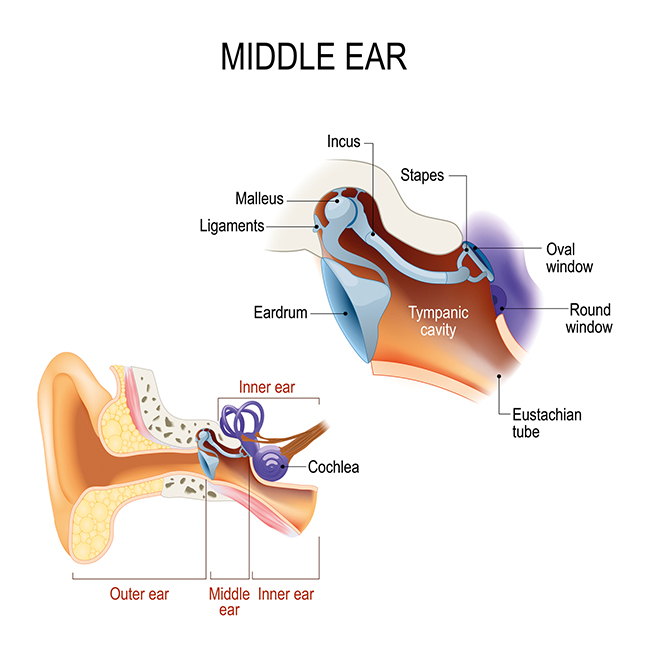
The ear has two functions: hearing and balance. The outer ear is shaped to catch sound waves and funnel them through the ear canal to the ear drum. The middle ear amplifies the vibrations on the ear drum and transmits them to the oval window, a thin membrane that seals the inner ear. The inner ear consists of two parts: the cochlea, which performs the hearing function, and the vestibular system, which helps maintain balance.1
The eustachian tube connects the middle ear to the airway in the back of the nose. It helps maintain equal air pressure on both sides of the eardrum and prevents fluid from accumulating in the middle ear. Upper respiratory infections, which inflame and block the eustachian tube, can lead to middle ear infections or changes in middle ear pressure, resulting in pain.
The nose and sinuses (small empty spaces connected to the nose) are lined with mucous membranes, which produce mucus to trap dirt particles, keeping the inhaled air clean. If these become blocked then normal drainage into the throat cannot occur, resulting in swelling and pain.
Click on the tabs below to learn more about common conditions that can affect the ears, nose and throat.
Earwax is produced to help keep the ears clean and free from dirt and germs. Typically, earwax falls out naturally, but in some people the wax can build up and harden causing symptoms such as earache, difficulty hearing, itchiness, dizziness, ear infections and tinnitus (sounds such as high-pitched tones coming from inside the ear).
Some people are more prone to earwax build up if they:
- Naturally have more wax in their ears
- Have hairy or narrow canals (the tubes that link the eardrum and outer ear)
- Wear hearing aids, earplugs and other things you put in your ear that can push the wax further in.
Age can also be a factor, as wax gets harder and does not fall out as easily as we get older. Earwax can usually be removed by using eardrops containing oils or chemicals. Oils soften the earwax and help it to fall out. Chemicals, such as urea hydrogen peroxide, dissolve the earwax. Some drops contain a combination of the two.
If the ear doesn’t clear after five days of treatment or the ear is badly blocked and the customer is unable to hear, you should refer them for earwax removal. You could refer them to Boots Hearingcare* or some GP practices will provide this treatment.
Customers with recurrent earwax should be advised to use the drops on an ongoing basis to help keep the wax soft.
Boots Hearingcare
For customers with recurrent ear problems you could consider a referral to Boots Hearingcare.* They offer a 15 minute hearing health check where they can look for wax or middle ear issues before advising on suitable treatments and/or referral.
The symptoms of an ear infection usually start quickly and include: pain inside the ear; a high temperature of 38°C or above; being sick; a lack of energy; difficulty hearing; discharge running out of the ear; a feeling of pressure or fullness inside the ear; itching and irritation in and around the ear; and scaly skin in and around the ear.3
There are two types of ear infections:
- Otitis media – an infection of the inner ear, which is more common in children. It is associated with colds and flu and affects the eustachian tube.
- Otitis externa – an infection of the outer ear, which is common in people over 45 years. It is caused by something irritating the ear canal, such as eczema, water or wearing ear plugs.
Most ear infections will clear within a week and any pain or discomfort can be managed with paracetamol or ibuprofen, as appropriate. If it is an infection of the outer rather than inner ear, there are drops containing acetic acid available, which stop the spread of bacteria or fungus. To relieve pain and itching, there are drops that contain a local anaesthetic.
Some outer ear infections may be prevented by using specialist earplugs or drops when swimming to prevent water entering the ears.
Sinusitis is swelling of the sinuses, usually caused by an infection and often occurring after a cold or flu. It's common and usually clears up on its own within two to three weeks. Symptoms of sinusitis include: pain; swelling and tenderness around the cheeks, eyes or forehead; a blocked nose; a reduced sense of smell; green or yellow mucus from the nose; a sinus headache; a high temperature; toothache; and bad breath.4
You can advise customers to manage their symptoms with:
- Paracetamol or ibuprofen for the pain
- Saline nasal sprays or rinses
- Decongestant nasal sprays, drops or tablets to relieve congestion
- Steam inhalation, possibly with a few drops of essential oil, to clear the nasal passages.
You should refer customers to their GP if:
- Symptoms are severe
- Painkillers do not help or their symptoms get much worse
- Symptoms do not improve after one week
- They are affected by recurrent sinusitis.
When mucus drips and collects down the back of the throat it can cause a condition called post-nasal drip, the symptoms of this include a sore throat, cough/frequent throat clearing and hoarseness. Symptoms can be relieved by reducing the amount of congestion and lifestyle changes such as sleeping propped up on pillows.5
Red flags
Adults and children with any of the following symptoms should be referred to their GP:
• A very high temperature or feel hot and shivery
• Earache that does not improve after three days
• Swelling around the ear
• Fluid coming from the ear
• Hearing loss or a change in hearing
• A severe sore throat, dizziness or have been sick
• Regular ear infections
• A long-term medical condition, e.g diabetes or a heart, lung, kidney or neurological disease
• A weakened immune system.3
* Eligibility criteria and charges may apply.
2. https://www.nhs.uk/conditions/earwax-build-up/
3. https://www.nhs.uk/conditions/ear-infections/
4. https://www.nhs.uk/conditions/sinusitis-sinus-infection/
5. https://www.health.harvard.edu/staying-healthy/treatments-for-post-nasal-drip
References last accessed September 2020.